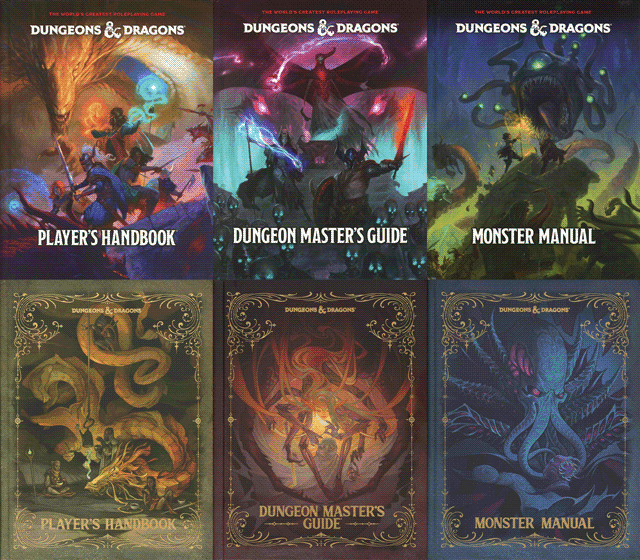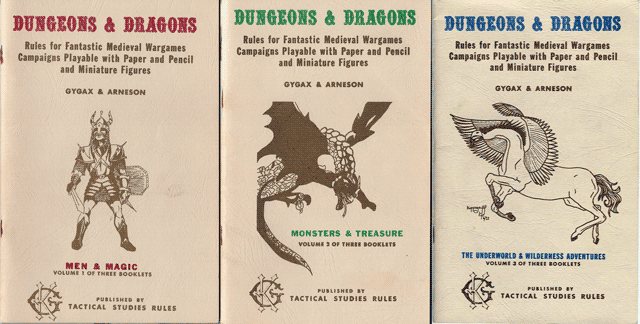
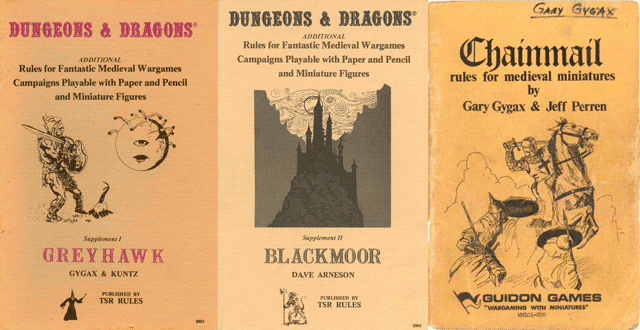
A quick guide to the different editions of D&D & AD&D. TSR Archive was invaluable for finding good scans of the various covers. I also recommend Wayne’s Books visual guide to the various sets that have passed through his hands, and Stu Horvath’s book Monsters, Aliens, and Holes in the Ground.
The basic game is not normally referred to by edition numbers, but rather by author (Holmes, Moldvay, Mentzer) or acronym (B/X, BECMI). The numbering I’ve used here is from Heroic Worlds by Lawrence Schick, who was head of TSR design & development at the time and so speaks with some authority.
The very first edition was published in 1974, written by Gary Gygax and Dave Arneson as a way of codifying the rules of Arneson’s Blackmoor campaign. It was a runaway success. Though the first print run was only a thousand copies, it had to be reprinted many times to keep up with demand. The early printings mention LOTR creatures such as ents, hobbits and balrogs, though these later become treants, halflings and balors under pressure from the Tolkien estate.
Emerging from a DIY culture of wargame enthusiasts, it didn’t even contain full combat rules. Instead, it directed players to Gygax’s Chainmail system, and developed its own systems piecemeal via optional and house rules. Men & Magic included an alternative hit table, Greyhawk added weapon damage, Blackmoor hit locations, and the informal Perrin Conventions introduced details such as knockback and dual wielding.
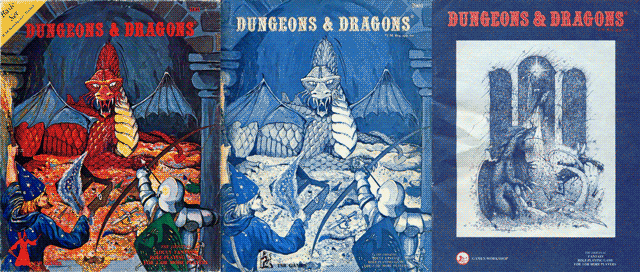
Prof. J Eric Holmes approached TSR and offered to write a new version of the original rules, a “Basic Set” making the rules easy to learn and covering levels 1-3. The intent was for this to provide an introduction for new players who could then move on to AD&D, currently still in development.
This was also the year Games Workshop obtained exclusive European distribution rights to D&D by the simple method of writing to Gary and asking for them. They published their own printing of Holmes, with John Blanche cover art and the infamous and understandably short-lived Mickey Mouse GW logo.
By now there was a thriving D&D scene, with different groups interpreting the rules differently, coming up with their own mechanics, and publishing in zines, newsletters and the pages of Dragon magazine. It was also no longer the only RPG - Tunnels & Trolls, Bunnies & Burrows, Metamorphosis Alpha, Traveller, and En Garde all came out during this period.
The diversity of styles of play became a problem for Gygax. Tournaments were popular, and D&D characters were regarded as portable, moving freely between campaigns and tournaments, bringing back all the loot and XP they obtained. An overly generous DM in one venue could unbalance a game in another. So Gary sought to bring increasing uniformity to play, and to make the game a more complex and tactical affair.
He had also fallen out with Arneson, and sought to cut him out of the royalties (for which Arneson would later sue, and win.) A new edition credited solely to himself would resolve that question.
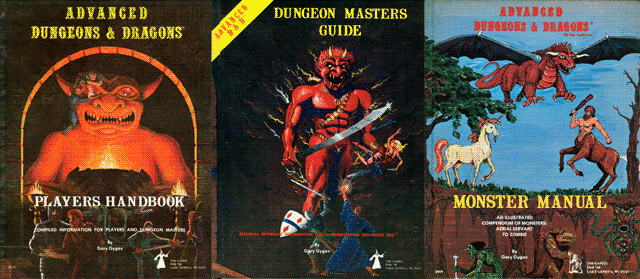
The Advanced game split the rules between a Player’s Handbook and a Dungeon Master’s Guide for the first time, based on Gary’s conviction that players should not know the rules of the game - and that their characters should be punished if they read the DMG!
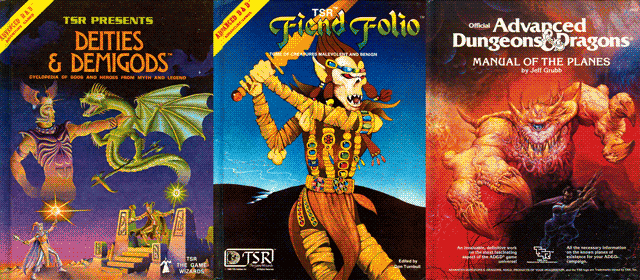
Deities & Demigods added mythological pantheons to the game (and, until told to cease & desist, Cthulhu and Melnibonean pantheons from the works of H.P. Lovecraft and Michael Moorcock) and was eventually renamed Legends and Lore as the game hastily tried to scrub off any hint of the occult in the face of the satanic panic. Fiend Folio brought in a particular sort of British weirdness, collecting oddball monsters submitted by the readers and contributors of White Dwarf.
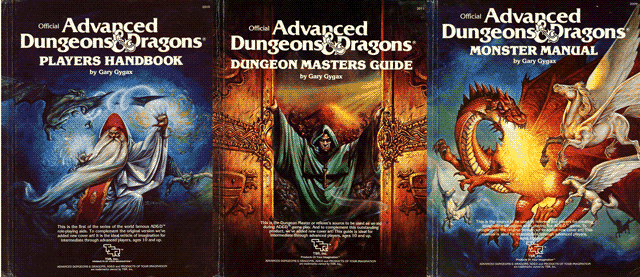
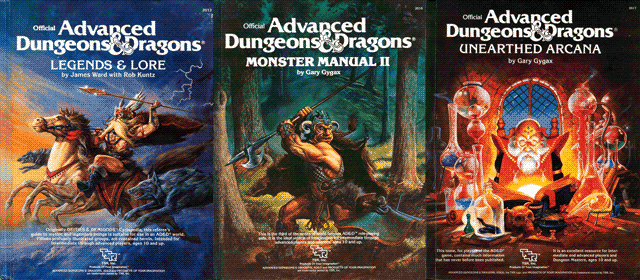
The books were revised in 1983, gaining the distinctive orange spines that characterised the line during the 80s, and many supplements were published during this era.
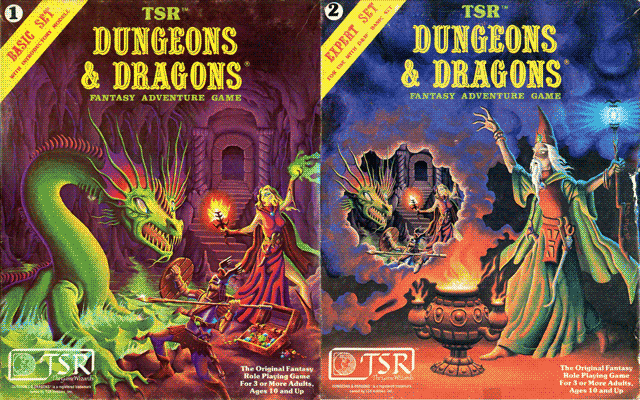
While working for TSR, Tom Moldvay was given the job of writing a new edition of D&D based on Holmes. Dave Cook & Steve Marsh wrote a new Expert set covering levels 4-14. Instead of going from Basic to Advanced, players could now go from Basic to Expert and remain within the same rules system. At this point Basic D&D became a distinct line separate from AD&D, with a more flexible, improvisational focus, closer to the varied culture of the early game.
This set is the gold standard for fans of old-school play: It’s close to the original game as played in the 70s, but doesn’t require reference to other games like OD&D or Holmes. Necrotic Gnome’s Old School Essentials is a direct copy of the game, while many other OSR systems are based on it, including my own.
Another notable feature of the B/X set was that the booklets were punched with holes for storage in a ring binder, and the books were organised in such a way that they could be dismantled and assembled into a single volume containing all the rules.
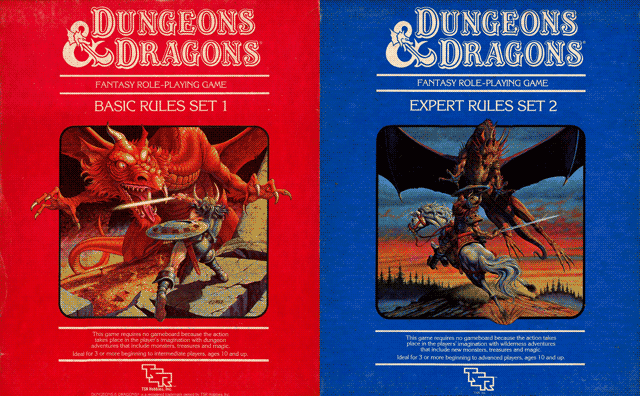
At this point D&D was a well-known brand, the D&D cartoon was on TV, toys of WARDUKE™, STRONGHEART™ and KELEK™ were in every toyshop. The new edition was notable for its toyetic boxed sets in bright colours, written by Frank Mentzer and slickly illustrated by Larry Elmore.
The basic set included solo adventures designed to serve as a tutorial, dropping the new player straight into solo adventures (a generation of players will never forgive the wizard Bargle, he knows what he did) before easing them into running games and designing their own dungeons.
The first two sets followed the Basic/Expert model of Moldvay.
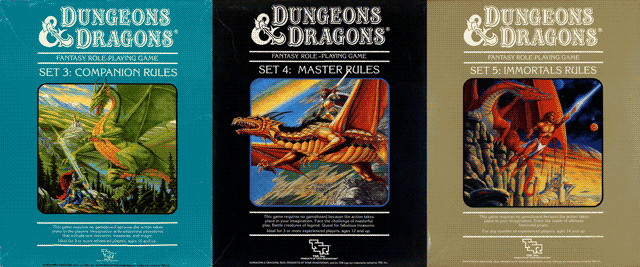
Later sets covered Companion levels (15-25), Master (25-36) and an Immortals set for PCs who have ascended to walk among the gods.
Supplements for this edition had a degree of anachronism and goofiness. One adventure has the PCs fighting time-travelling aliens who hate creativity and fun. The Gazetteer series includes The Kingdom of Ierendi, an island nation presented in the style of a modern day package holiday, and The Principalities of Glantri, a kind of magical Venice ruled by wizard princes themed on different european countries. If your campaign needs a Scottish lich wearing a tam o’ shanter, or a German wizard riding a Voltron into battle, this is the book for you.
The Book of Wondrous Inventions features a washing machine (skeletons put on your clothes and jump up and down in the water), a dishwasher (dirty dishes are dipped into a Charmed Black Pudding), and a device that drops an anvil on a skeleton when you pull a lever, causing you to gain 5xp (a concept that would later find its home in Minecraft.)
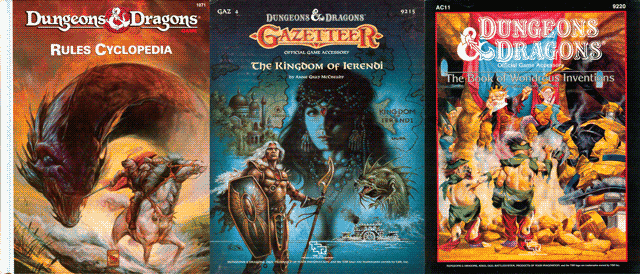
In 1991 all of the boxed sets apart from Immortals were collected into the Rules Cyclopedia, an extensive edition in a single hardcover. The line was finally cancelled in 1995, and all versions after that have been offshoots of AD&D.
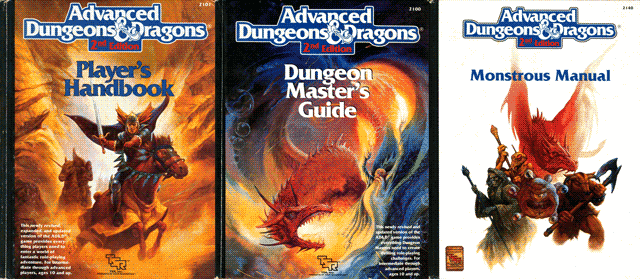
The second edition is similar to the first but much more professionally presented. The books are clean, printed in black and blue, and beautifully laid out.
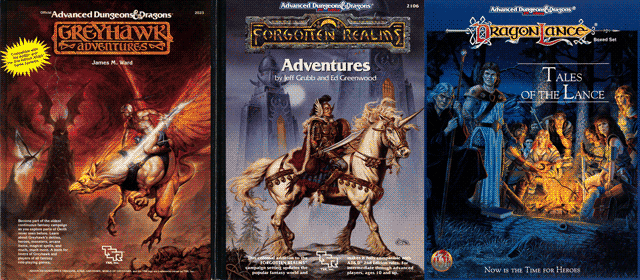
This edition is most notable for its explosion of campaign settings; while in OD&D you were expected to make your own world TSR now saw its worlds as product lines. Already established were the big three of Forgotten Realms, Greyhawk, and Dragonlance.
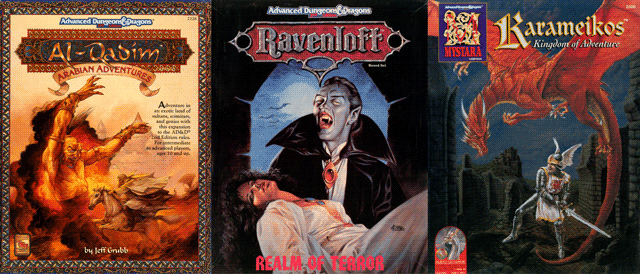
Other settings explored alternatives to medieval fantasy - Arabian Nights, gothic horror, post-apocalyptic fantasy, space fantasy, and the world of the Mentzer D&D books was revived as an introductory boxed set for new players complete with audio CD.
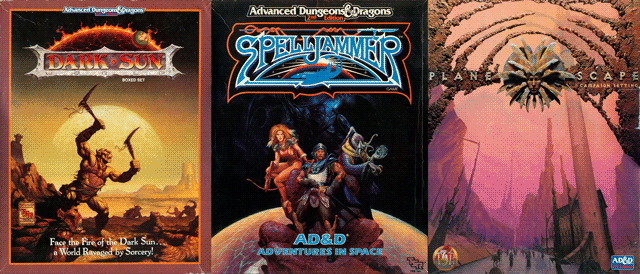
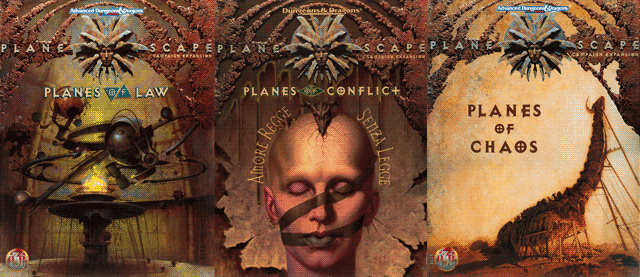
Planescape was the crown jewel of 2E settings, with its four expensive boxed sets, lavish presentation, whimsical Tony Diterlizzi art and strange philosophical reinterpretation of the rather dry Manual of the Planes.
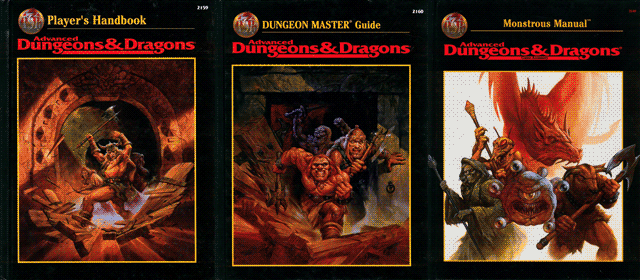
The system was revised in 1995, and new optional mechanics were introduced that would later find their way into 3rd edition.
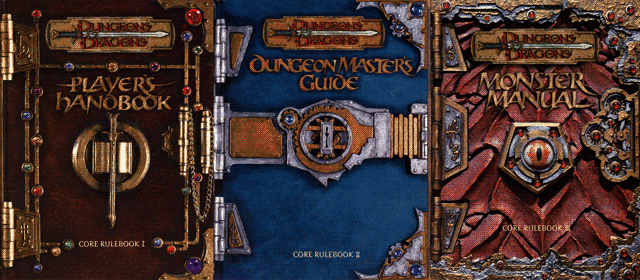
TSR went out of business and was bought by WotC, who were bought by Hasbro. This lead to the first really substantial rules rewrite since AD&D 1E.
This era also saw the rise of the OGL and third party products - WoTC concluded that the demise of TSR came about because of overinvestment in niche campaign settings and supplements, which by their nature never sell as well as the core books. The OGL represented a deal with third party creators: We’ll let you profit from D&D by selling your adventures and supplements, if you keep driving sales of the core books.
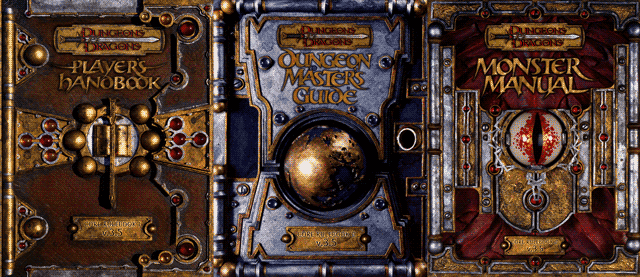
Revised editions were published in 2003.
4th edition took the streamlining of 3E and the uniformity of 1E to its logical conclusion and created an almost boardgame-like experience. It was not actually a flop and sold well, but was wildly unpopular among the established playerbase.
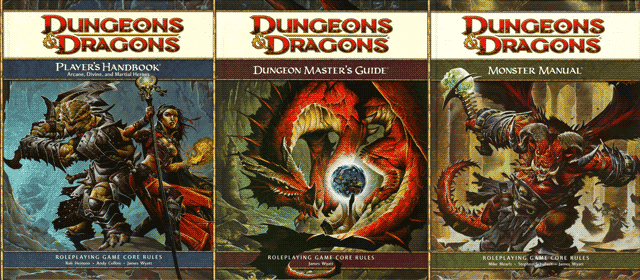
Revised editions were published in 2010.
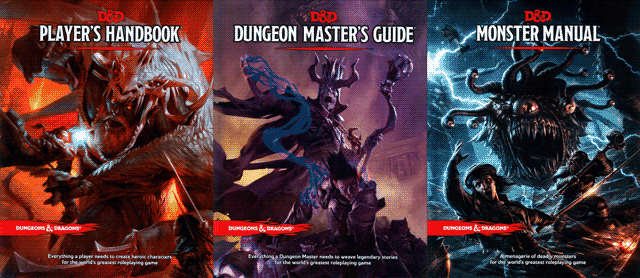
WotC mended fences with the fans with extensive consultation on ‘D&D Next’ which led to the 5th edition, a respectable effort at capturing the historical essence of D&D with modern rules, leading to the most popular edition yet.
The pressure to generate profits for their parent company continued and led to various efforts to turn D&D into a subscription service, sometimes leading to conflict with the playerbase (such as during their ill-advised attempt to ‘revoke’ the OGL in 2023.)
A revised edition was published in 2024.