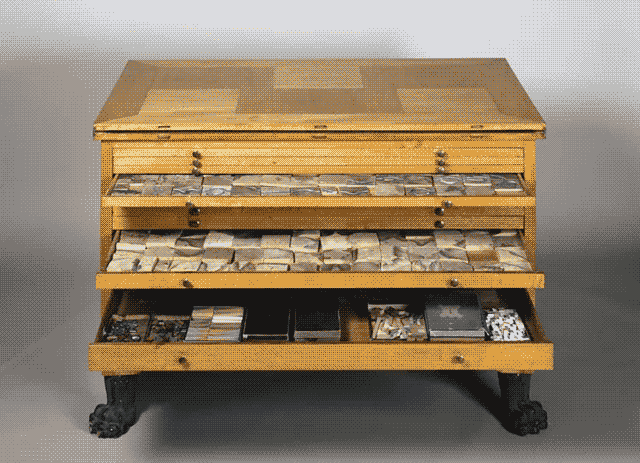
In 1812 the Prussian military wanted to train their officers using wargames, but they had a problem: Wargames at the time were abstracted and played on a grid, like chess. To train officers to oversee real battles, you need free movement, terrain, fog of war etc.
Prussian nobleman George Leopold von Reisswitz invented Kriegsspiel, played with wooden blocks on terrain sculpted of damp sand. He made a gaming table as a gift for the king, replacing the sand with painted porcelain tiles allowing terrain to be assembled like a jigsaw puzzle.
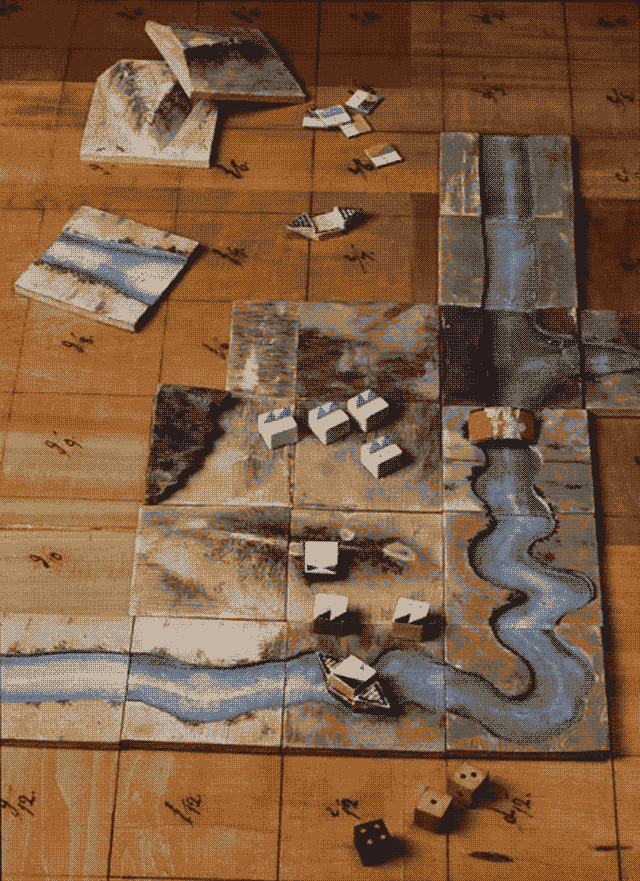
The result was very popular with the royal family, and Reisswitz’ son, Georg Heinrich Rudolf Johann von Reisswitz, continued development of it. By 1824 the finished version was being mass produced by the army.
Reisswitz junior’s version was the first wargame to feature hitpoints for units - previously, units had simply been ‘taken’ and removed from play as in chess. More importantly, it had a referee. Players would give their orders to the referee who would then resolve combat, move pieces, and keep track of hidden information.
The game was still in use 50 years later, when Lieutenant Wilhelm Jacob Meckel wrote the following critique:
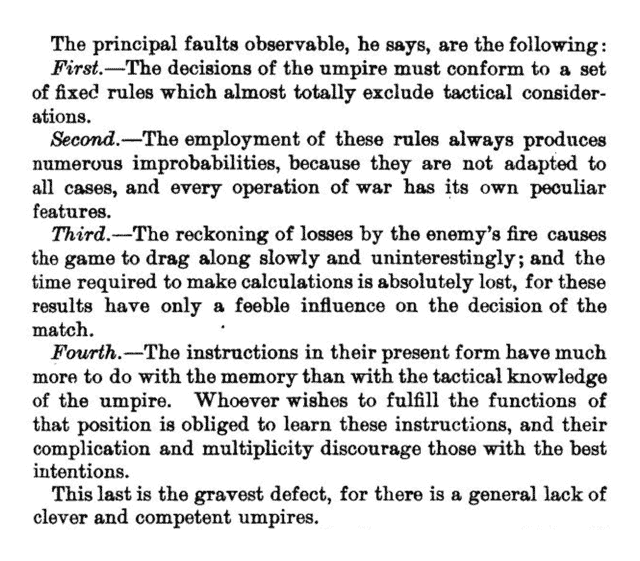
That’s right, 150 years ago the combat rules were too slow and there weren’t enough DMs.
To address these problems, in 1876 General Julius von Verdy du Vernois proposed Free Kriegsspiel: a version of the game dispensing with most of the rules and leaving all decisions up to the referee.
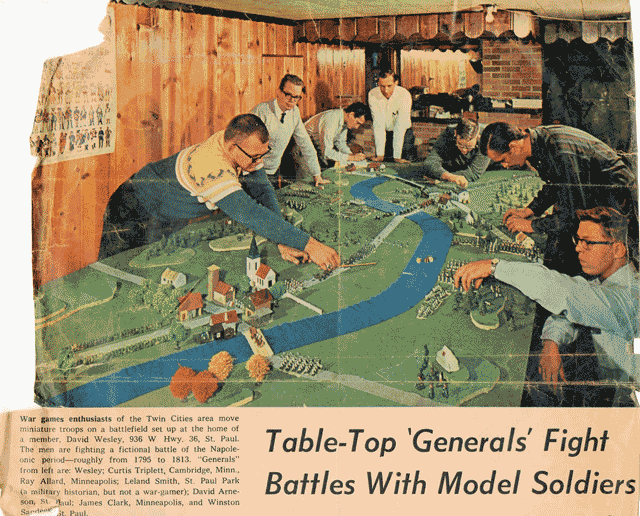
This in turn inspired Charles A. L. Totten in his 1880 game Strategos, which inspired Dave Wesely when he discovered it in the University of Minnesota library in 1967 and used his own versions of it in his Braunstein games, which inspired Gary Gygax to use it in Chainmail, which Dave Arneson used in Blackmoor, which led ultimately to the first version of Dungeons & Dragons.
So that table at the top of the page is the earliest ancestor of D&D!
If you’re in Berlin, you can go and see it at the Palace Charlottenburg. Although, folded up, it just looks like an unassuming chest of drawers.